
Why Do CO2 Cylinder Valves Fail During Transportation?
Some cylinders are perfectly normal during factory testing, but after long-distance sea and land transport or multiple loading and unloading operations, valve leaks, valve damage, or even malfunction may occur. In actual transportation, the valve is the most vulnerable part of a carbon dioxide cylinder. Once the valve malfunctions, it not only affects use but may also lead to after-sales claims and customer complaints.
Why is the valve the most vulnerable component during transportation?
Carbon dioxide cylinders typically consist of a cylinder body, cylinder thread, valve, and protective devices. The cylinder body is made of high-strength steel or aluminum alloy, capable of withstanding high internal pressure.
The valve is a precision component, containing sealing rings, a valve stem, a spring, and multiple connecting structures, performing the crucial function of gas storage and release. During transportation, even if the cylinder body is not damaged, the valve may still suffer damage due to external impacts:
Valve stem deformation
Damaged seals
Loose threads
Valve leakage
Switch malfunction
Five main reasons for carbon dioxide cylinder valve failure.
1. Impact damage to valve structure.
During warehouse handling, loading, unloading, and transshipment, gas cylinders may come into contact with shelves, forklifts, and container walls. If the top of the cylinder is directly impacted, the impact force will be concentrated on the valve area, causing the valve stem to bend or break, and damaging the threads.
2. Prolonged vibration leading to loosening of connections.
Transported gas cylinders undergo factory shipment, port transport, sea voyage, and transshipment at the destination port, a process that can last for several weeks. Continuous vibration during transit can affect the valve connection area, easily leading to loosening of fasteners, valve displacement, and wear of the sealing surface.
3. Inadequate packaging increases transportation risks.
Some low-cost products use single-layer plastic film packaging, without protective caps, or without cushioning materials to reduce transportation costs. When gas cylinders move inside the container, the valve area is most vulnerable to impact.
4. Additional pressure from improper stacking.
Improper stacking of gas cylinders, resulting in prolonged pressure on the valve, may lead to valve displacement, seal deformation, and damage to the protective cap.
5. Temperature variations affect sealing performance.
Significant temperature differences can occur in different transportation environments. Such continuous temperature fluctuations can reduce the elasticity of the valve's internal materials and accelerate aging.
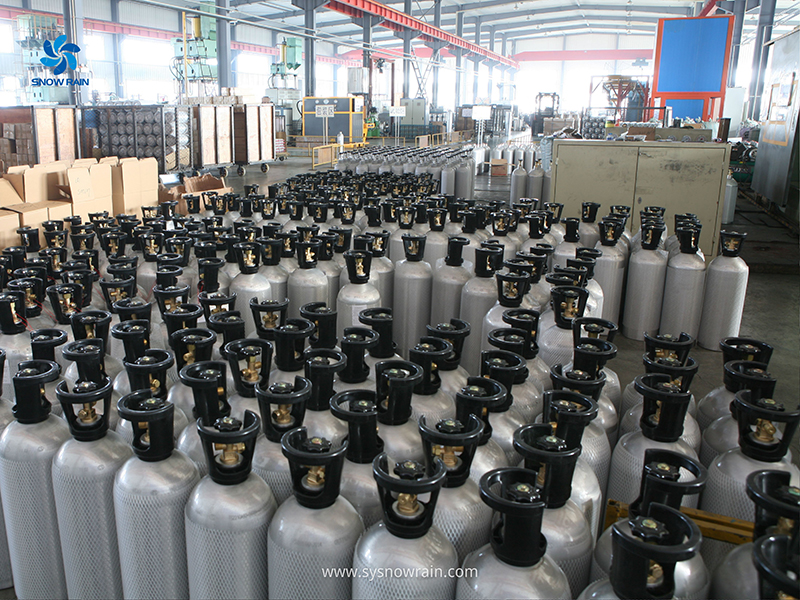
Common protective measures in international transportation:
1. Adding valve protective caps.
2. Anti-collision ring design.
3. Pallet securing during transport.
4. Internal reinforcement of containers.
5. Factory airtightness testing.
6. Professional dangerous goods transportation solutions.
How to choose a CO2 cylinder supplier with transportation experience?
A supplier's transportation experience is just as important as product quality. When selecting a supplier, it is recommended to focus on the following aspects:
1. Export experience
2. Packaging solutions
3. Airtightness testing
4. International certification requirements
5. Transportation support
Impact, vibration, insufficient packaging, incorrect stacking, and temperature variations can all lead to decreased valve performance or even failure. For buyers, understanding these risks in advance and choosing suppliers with comprehensive packaging systems and international transportation experience can effectively reduce the rate of damage upon arrival, minimize after-sales issues, and improve overall procurement efficiency.
If you are looking for a carbon dioxide cylinder supplier with higher transportation reliability, more comprehensive quality control, and more mature export experience, please feel free to contact us.