
Why Oxygen Cylinder Certification is More Important Than Low Price
Oxygen cylinders are indispensable products in the global industrial gas, medical gas, and fire-fighting equipment markets. However, compared to the unit price of an oxygen cylinder, whether the product has complete certification, complies with market regulations, and can clear customs and be sold smoothly is of paramount importance.
Why are more and more buyers no longer focusing solely on price?
In recent years, international markets have continuously strengthened regulations on pressure vessels and gas storage equipment, and more and more companies are beginning to prioritize compliance in their procurement decisions. Oxygen cylinders are pressure vessels that store high-pressure oxygen. Problems in the design, manufacturing, or testing of oxygen bottle portable can lead to leaks, damage, or even safety accidents.
For importers, procurement costs are only one part of the overall supply chain costs. A low-priced but poorly certified oxygen cylinder may result in:
1. Failure to pass customs inspection.
2. Inability to enter the local market for sale.
3. Rejection by end customers.
4. Failure to pass project acceptance.
5. Risk of product recall.
6. Increased legal liability and compensation risks. What risks might be hidden in low-priced oxygen cylinders?
Low price does not necessarily mean high cost-effectiveness. Some low-priced oxygen cylinders may have the following problems:
1. Unstable material quality.
Oxygen cylinders are usually made of high-strength steel or aluminum alloy. For oxygen cylinders with unclear raw material sources or those not manufactured according to relevant standards, the strength, pressure resistance, and service life of the cylinder may be affected.
2. Incomplete testing procedures.
Reputable manufacturers typically conduct: hydrostatic testing, airtightness testing, ultrasonic testing, material composition testing, and burst testing. Some low-priced oxygen bottle portable may reduce testing steps to lower production costs.
3. Inconsistent documentation and product specifications.
You may encounter situations where the sample has certification, but the bulk order products are not the same specifications as the certified products, which may lead to customs clearance issues.
4. Insufficient after-sales service and traceability capabilities.
When product problems occur, buyers need to trace: production batch, testing records, raw material sources, and manufacturing dates, etc. Therefore, many small suppliers relying solely on low prices often cannot meet the needs of large projects and long-term cooperation.
What are the common certifications for oxygen cylinders?
1. CE Certification
Primarily applicable to the European market, CE certification signifies that the product meets the basic safety requirements of the EU market.
2. DOT Certification
For the US market, the transportation, sale, and use of oxygen cylinders must comply with DOT standards, which is also a necessary condition for suppliers.
3. ISO Standards
Applied globally, these standards help establish a unified quality management system.
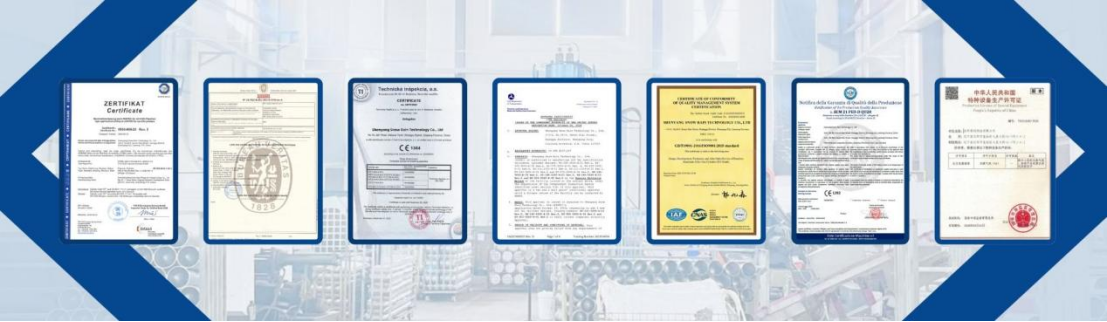
To reduce procurement risks, it is recommended that buyers confirm the following documents before placing an order:
1. Product Certification
Confirm the authenticity and validity of the certification. Check the certification body, scope, and validity period.
2. Test Reports
Check if key testing items such as hydrostatic testing, burst testing, and airtightness testing are included.
3. Material Certification Documents
Confirm the source and performance parameters of the steel or aluminum alloy materials used in the oxygen cylinders.
4. Factory Inspection Records
Understand whether the oxygen cylinders underwent a complete testing process before leaving the factory.
5. Product Traceability Data
Confirm whether the oxygen bottle portable have batch numbers, manufacturing dates, and serial number management, which is crucial for subsequent quality management.
How to Choose a Compliant Oxygen Cylinder Supplier?
Besides price, buyers should also focus on the following aspects:
1. International market certifications.
2. Stable production capacity.
3. Complete testing system.
4. Export experience.
5. Ability to provide technical support.
If you are looking for an internationally certified oxygen cylinder supplier, please leave a message to contact us.