
How is PCP Air Cylinder Fatigue Testing Conducted?
A critical element in determining the long-term stability of an air cylinder is the Fatigue Test. This is because a PCP air cylinder does not merely withstand pressure a single time; rather, it undergoes a prolonged cycle of repeated pressurization and depressurization. Simply put, it experiences a continuous pressurize-depressurize cycle every day. Over time, if the structural design or materials are substandard, this can lead to performance degradation or even pose safety hazards. For reputable manufacturers, fatigue testing is not an optional formality; it is a vital benchmark for determining whether a PCP air cylinder can maintain stable performance over the long term.
I. What is PCP Air Cylinder Fatigue Testing?
Fatigue testing can essentially be understood as a long-term simulation of real-world usage.
During the testing process, the PCP air cylinder is subjected to a continuous sequence of:
Pressurization
Pressure Holding
Depressurization
Repressurization
This cycle is repeated numerous times to simulate the conditions an air cylinder experiences during prolonged, repeated recharging in a real-world operational environment. Therefore, the core objective of fatigue testing is to verify: whether the cylinder can consistently withstand pressure over time, whether its structural integrity changes gradually with each cycle, and whether its sealing performance deteriorates. In the production of PCP air cylinders, Snowrain utilizes cyclic pressure testing to simulate long-term usage environments, thereby ensuring that our products maintain stable performance even after undergoing high-frequency pressurization and depressurization cycles.
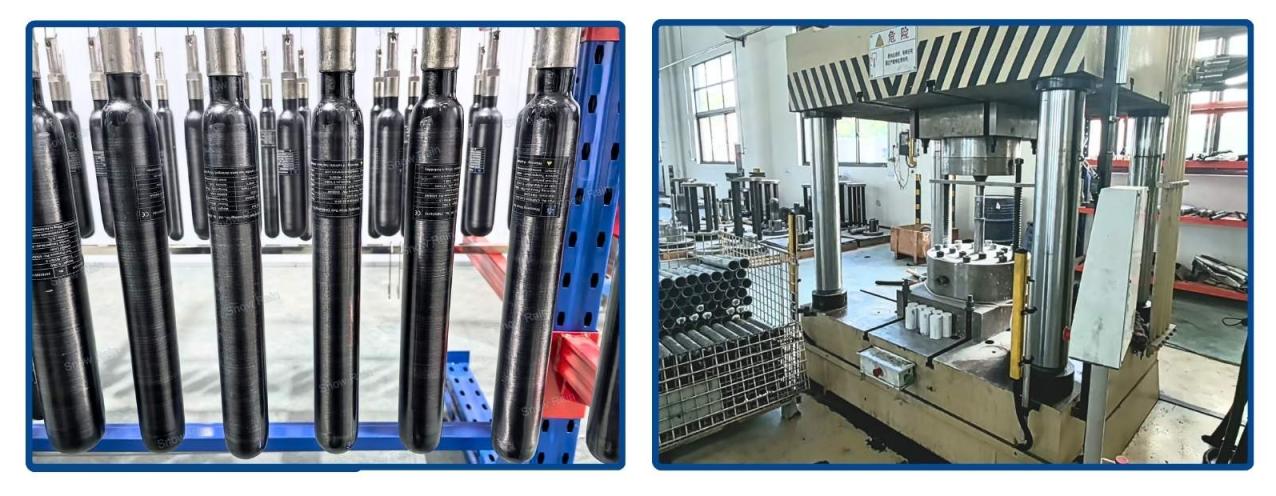
II. Why is Fatigue Testing Essential for PCP Air Cylinders?
PCP air cylinders are high-pressure devices—particularly 300-bar models—that undergo a significant number of pressure cycles throughout their service life. If a user utilizes their PCP system frequently, the air cylinder may undergo hundreds or even thousands of pressurization and depressurization cycles within a single year.
If the materials, structural design, or manufacturing processes are inadequate, these prolonged cycles can lead to issues such as:
Micro-deformation of the cylinder body
Loosening of connection ports
Degradation of sealing performance
Localized stress concentration
These issues may not be immediately apparent, but they will gradually worsen as the duration of use increases. Consequently, many European clients prioritize a manufacturer's comprehensive fatigue testing capabilities when sourcing PCP air cylinders, as they are more concerned with the product's performance years down the line rather than merely its condition upon leaving the factory. During the product development phase, Snowrain places a strong emphasis on long-term cyclic stability; through structural optimization and rigorous material control, we enhance the air cylinder's resistance to fatigue, thereby ensuring its reliability throughout its entire service life.
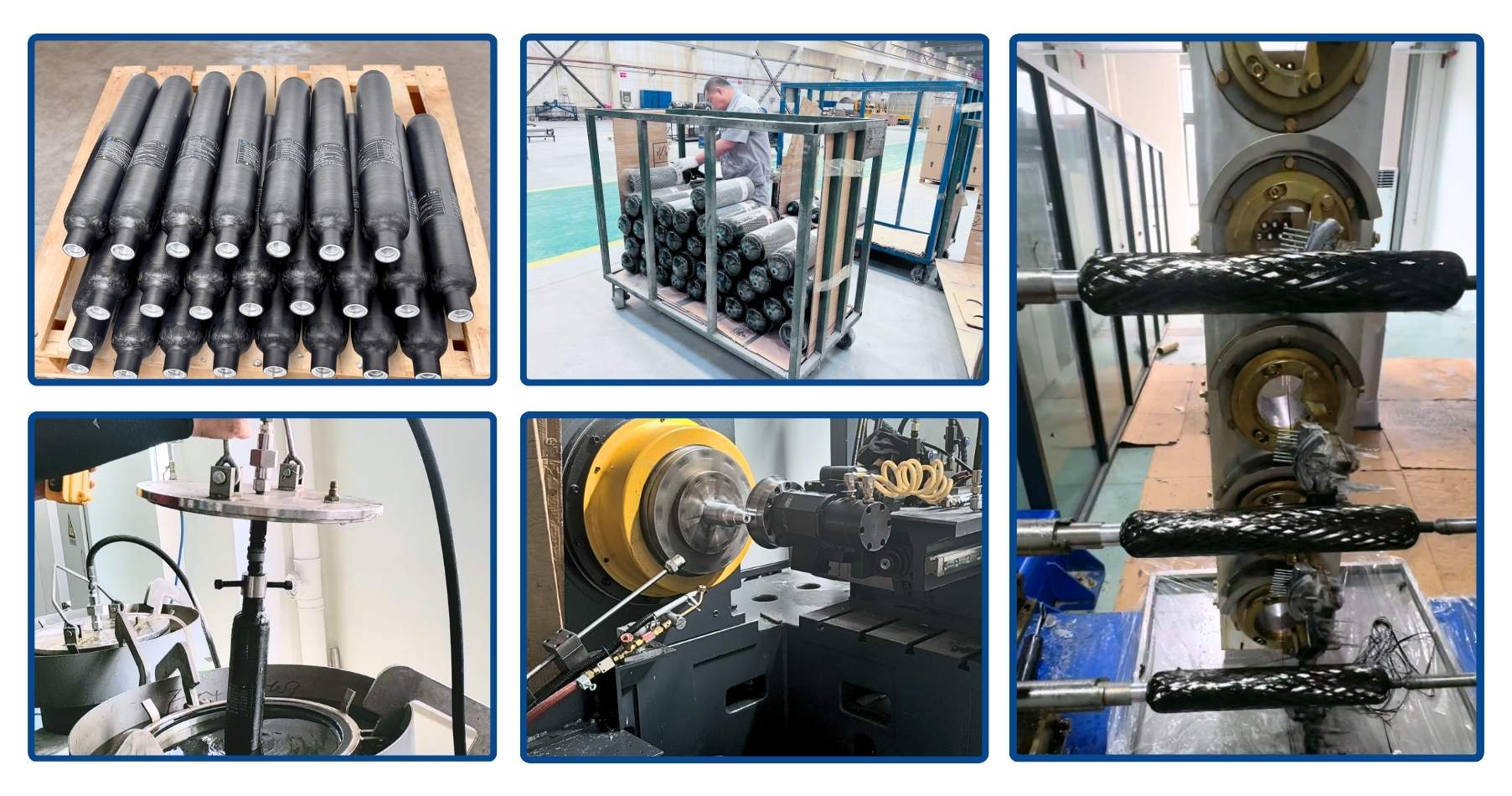
III. How is PCP Air Cylinder Fatigue Testing Typically Conducted?
Reputable manufacturers of PCP air cylinders typically utilize specialized pressure cycling equipment when conducting fatigue tests. During the testing process, the equipment continuously modulates the internal pressure according to a pre-programmed sequence—for instance, gradually increasing the pressure from ambient levels to the cylinder's rated working pressure, releasing it back to a low-pressure state, and then repeating this cycle continuously. Some high-standard testing protocols involve tens of thousands of cycles to rigorously validate the cylinder's long-term stability under sustained use.
In addition to monitoring for structural changes in the cylinder body, key areas of focus during inspection include:
Whether any leaks have occurred;
The stability and integrity of the connection interfaces;
The presence of any permanent deformation;
Whether the cylinder's pressure-retention capability has diminished.
A truly high-quality PCP air cylinder is not merely capable of withstanding pressure; it must also maintain its structural integrity and stability after undergoing extensive pressure cycling over time. Snowrain is equipped with professional pressure testing and cycling equipment, enabling us to conduct rigorous, long-term cycle validation on our PCP air cylinders. Furthermore, we incorporate batch-based sampling inspections to ensure consistent product quality across every production run.
Contact Us or Visit Our Factory
If you are seeking a stable and reliable supplier of PCP air cylinders, or if you wish to learn more about our testing protocols and manufacturing capabilities, please do not hesitate to contact us. We also extend a sincere invitation for you to visit the Snowrain factory in person, where you can witness firsthand the complete lifecycle of a PCP air cylinder—from manufacturing and quality inspection through to the final fatigue testing stages. Snowrain looks forward to the opportunity to collaborate with you.